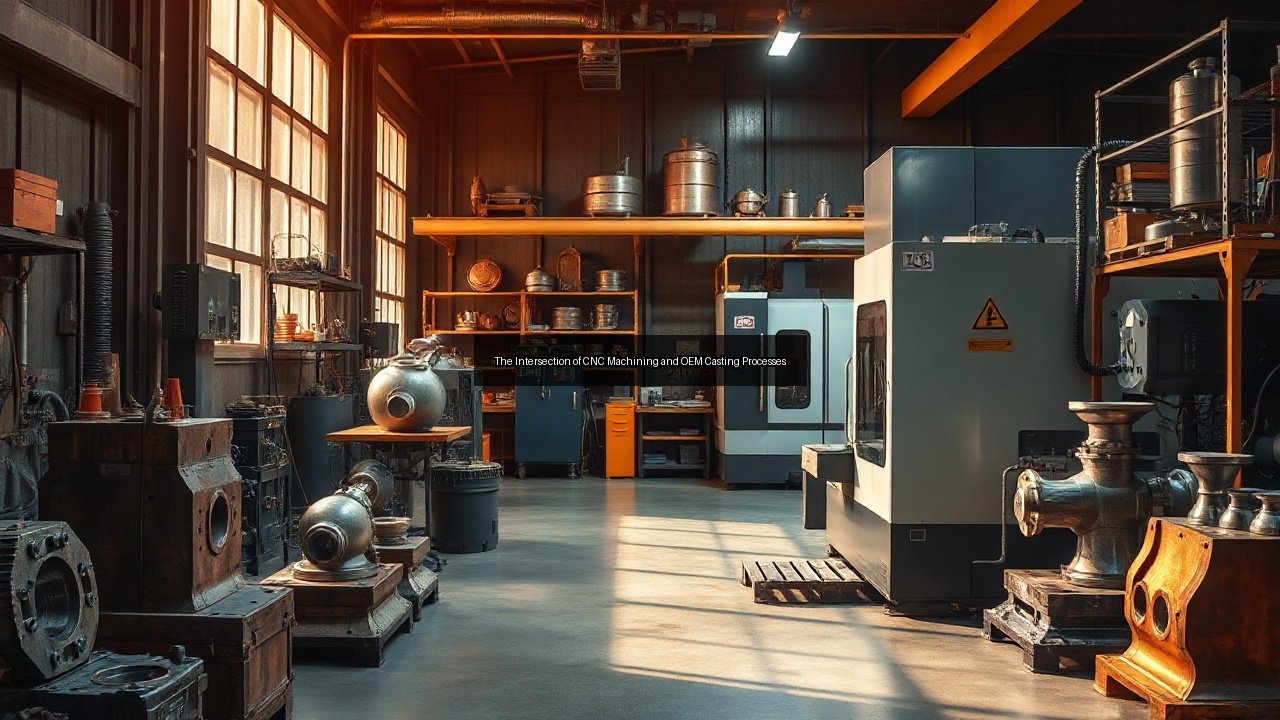
The Intersection of CNC Machining and OEM Casting Processes
Understanding OEM Casting Processes
Overview of OEM Manufacturing
OEM (Original Equipment Manufacturer) manufacturing involves producing components that other companies use to build their products. In this ecosystem, OEM casting plays a pivotal role, providing the necessary parts and materials that meet specific quality standards. OEM manufacturers work closely with clients to understand their requirements, ensuring that each casting aligns perfectly with the intended application. This relationship not only streamlines the production process but also enhances product reliability and performance. By utilizing advanced casting techniques, OEMs can deliver high-quality components that are essential for various industries, including automotive, aerospace, and electronics.
Importance of OEM Casting in Industry
OEM casting stands at the intersection of quality and efficiency in manufacturing. It enables companies to produce intricate designs that would be challenging or impossible to achieve through other methods. Industries rely on OEM castings for their durability and strength, especially in critical applications where failure is not an option. The casting processes allow for the mass production of components while maintaining dimensional accuracy, which is essential for compatibility in assemblies. Furthermore, the use of OEM casting helps to reduce material waste and production costs, making it an attractive option for manufacturers looking to optimize their supply chains.
Types of OEM Casting Processes
Several casting processes cater to the diverse needs of OEM manufacturers. Investment casting, known for its precision, uses a wax pattern that is coated with a ceramic shell. Once the shell hardens, the wax is melted away, leaving a cavity that is filled with molten metal. This technique is ideal for complex shapes and thin walls. Die casting, another popular method, involves injecting molten metal into a mold under high pressure. This process produces high-volume parts quickly and efficiently. Lastly, sand casting, the most traditional method, uses sand as a mold material, offering flexibility and cost-effectiveness, especially for low-volume production. Each of these processes has unique advantages, making them suitable for different applications in OEM manufacturing.
CNC Machining: A Key Component in OEM Casting
Role of CNC Machining in Enhancing Precision
CNC machining plays a critical role in enhancing the precision of OEM castings. This technology employs computer-controlled machines to perform complex cutting, drilling, and milling tasks with unmatched accuracy. After the casting process, CNC machining refines the surface finish and tightens tolerances, ensuring that the final product meets the exact specifications required by OEMs. The integration of CNC machining into the casting workflow reduces the risk of human error and increases repeatability, crucial for high-volume production runs. By leveraging CNC technology, manufacturers can achieve consistent quality across their castings, which is essential for maintaining competitive advantage in the market.
Integration of CNC Machining with Casting Processes
The integration of CNC machining with casting processes creates a powerful synergy that enhances overall manufacturing efficiency. After a casting is produced, CNC machining can be employed to perform secondary operations such as deburring, drilling, and finishing. This streamlining reduces lead times and minimizes the handling of parts, leading to more efficient workflows. Additionally, the combination of these technologies allows for rapid prototyping and iterative design, enabling OEMs to innovate more quickly. The ability to quickly transition from casting to machining supports the agile production methods that modern manufacturers seek, ensuring that they can meet ever-changing market demands.
Comparative Analysis: CNC Machining vs. Traditional Methods
When comparing CNC machining to traditional machining methods, several distinctions emerge. Traditional methods often rely on manual settings and adjustments, which can lead to inconsistencies and longer production times. In contrast, CNC machining utilizes programmed instructions that allow for precise replication of complex geometries. This advantage reduces the likelihood of errors and enhances production speed, making CNC an ideal choice for OEM casting applications. Furthermore, CNC machines can process multiple parts simultaneously, further increasing efficiency. While traditional methods may still hold value for simple tasks or low-volume runs, CNC machining's capabilities make it the preferred option for high-precision OEM castings.
Exploring Different Casting Techniques for OEM Applications
Investment Casting: Precision and Versatility
Investment casting, often referred to as lost-wax casting, offers remarkable precision and versatility, making it a favorite among OEM manufacturers. This method produces detailed and complex geometries that are difficult to achieve with other casting processes. The wax patterns used in investment casting can be created to exact specifications, allowing for intricate designs without compromising strength. Moreover, this technique allows for a wide range of materials, including aluminum and various alloys, to be cast oem metal casting with excellent surface finishes. The ability to produce small tolerances means that parts require minimal machining after casting, which saves both time and costs, making investment casting a highly efficient option for OEM applications.
Die Casting: Efficiency and Scale
Die casting stands out as one of the most efficient methods for producing high-volume OEM components. This process involves forcing molten metal into a mold under high pressure, resulting in parts that have excellent dimensional accuracy and a smooth surface finish. Die castings are typically made from aluminum, zinc, or magnesium, which provide lightweight yet robust solutions for various applications. This method allows for rapid production cycles, making it ideal for industries that demand large quantities of components in short timeframes. The ability to produce complex shapes and thin-walled designs further enhances die casting's appeal for OEM manufacturers looking to optimize production efficiency while maintaining quality.
Sand Casting: Cost-Effectiveness and Flexibility
Sand casting remains one of the most widely used techniques in OEM casting due to its cost-effectiveness and flexibility. This method utilizes a mixture of sand and binders to create molds, which can be easily shaped to accommodate various designs. Sand casting is particularly advantageous for low to medium production runs, as it requires less initial investment compared to other casting processes. The flexibility of sand casting allows manufacturers to switch between different designs without significant retooling, making it an ideal choice for custom OEM parts. Despite its simplicity, modern advancements in sand casting techniques have improved the quality and precision of castings, ensuring that they meet the high standards required by OEMs.
Materials Used in OEM Casting and Their Applications
Iron and Its Alloys: Ductile and Cast Iron
Iron and its alloys, particularly ductile iron and cast iron, play a significant role in OEM casting. Ductile iron, known for its high tensile strength and ductility, is commonly used in applications requiring durability and resistance to impact. Its excellent machinability makes it suitable for producing complex shapes with tight tolerances. Cast iron, on the other hand, offers superior wear resistance and is often used in heavy machinery and automotive components. Both materials provide OEM manufacturers with the ability to create robust and long-lasting products that withstand demanding operating conditions, making them staples in the casting industry.
Aluminium in OEM Castings: Lightweight Solutions
Aluminium has become a go-to material for OEM castings due to its lightweight and corrosion-resistant properties. With the increasing demand for energy-efficient solutions, aluminium castings are favored in industries like automotive and aerospace, where weight reduction is critical. The versatility of aluminium allows it to be easily cast into intricate shapes, contributing to design flexibility without compromising strength. Moreover, aluminium castings can be treated to enhance their mechanical properties, ensuring they meet the rigorous standards required by OEMs. As manufacturers continue to seek ways to improve performance while reducing weight, aluminium will remain a key material in the OEM casting landscape.
Considerations for Material Selection in Casting Processes
Choosing the right material for OEM casting involves several considerations. Factors such as mechanical properties, thermal resistance, and compatibility with the intended application must be assessed to ensure optimal performance. OEM manufacturers must also evaluate cost-effectiveness and the production volume when selecting materials. For example, while metals like aluminium might be preferred for lightweight applications, heavier metals like iron may be necessary for components requiring substantial strength and durability. Understanding the specific requirements of each project enables manufacturers to make informed decisions that align with both performance and budget constraints, ultimately leading to successful outcomes in the casting process.
See Also
- The Impact of Material Selection on OEM Casting Quality
- A Deep Dive into Investment Casting for OEM Applications
- Exploring the Advantages of OEM Metal Casting for High-Performance Parts
- The Art of OEM Casting How to Choose the Right Process for Your Needs
- The Benefits of Ductile Iron in OEM Casting Applications